
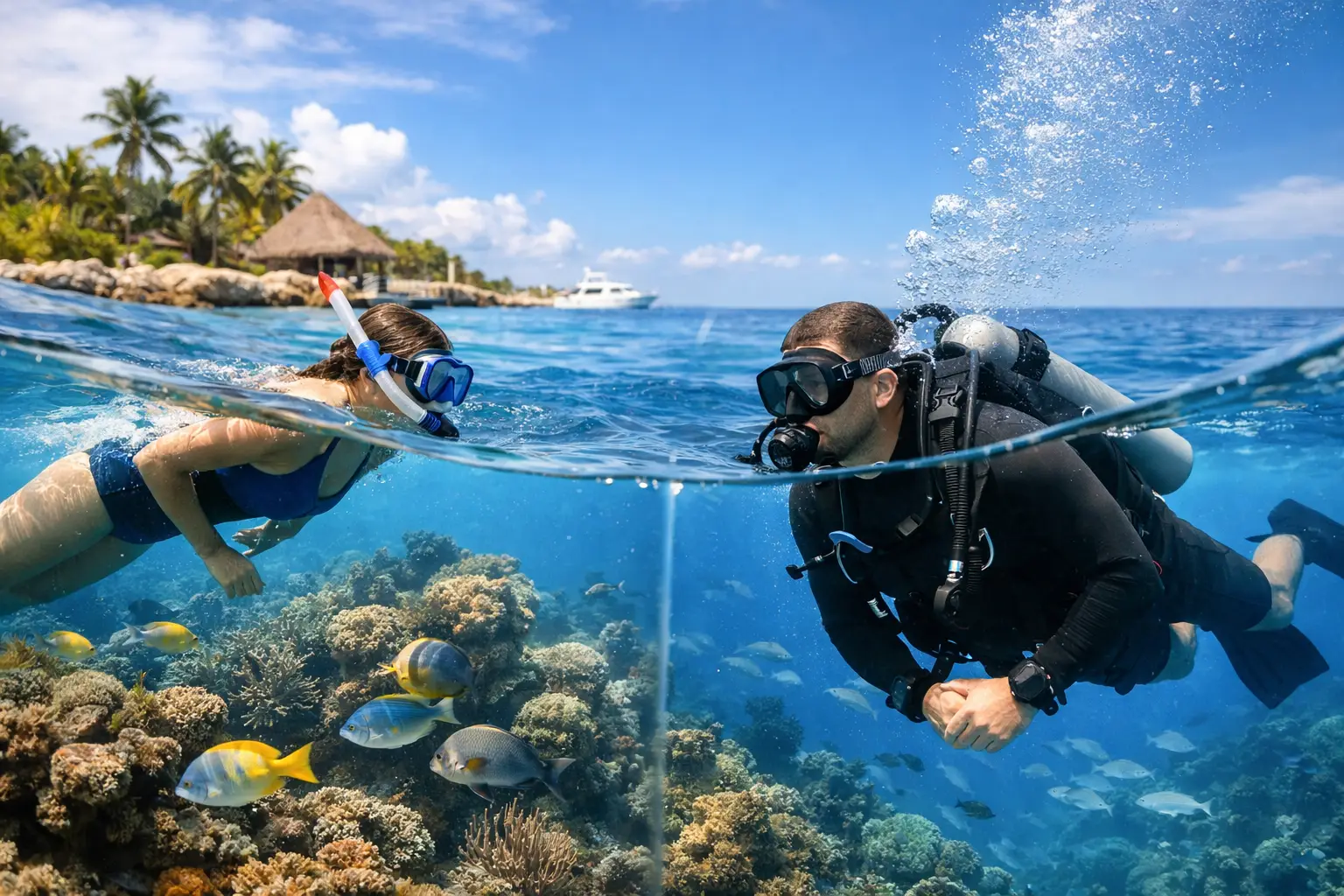
A few miles of clear Caribbean water can make the snorkeling versus scuba Cozumel decision feel harder than it should be. From the surface, you may see bright fish, sea fans, and coral heads almost immediately. Below the surface, certified divers can drift along dramatic walls where the reef drops away into deep blue water. Both are outstanding ways to spend a port day, but they deliver very different experiences.
For most cruise guests, the right choice comes down to comfort in the water, available time, budget, and how close you want to get to the reef. Here is how to choose an excursion that feels exciting without making your day ashore more complicated than it needs to be.
Snorkeling Versus Scuba Cozumel: The Big Difference
Snorkeling keeps you on the surface with a mask, snorkel, fins, and usually a flotation vest. You breathe normally through the snorkel, look down at the reef, and return to the boat or beach whenever you want. It is accessible, social, and an easy fit for families and groups with mixed experience levels.
Scuba places you underwater with a tank, regulator, buoyancy-control device, and professional guide or dive instructor. Instead of seeing the reef from above, you move through it at depth. That puts you closer to coral formations, schools of fish, turtles, and the changing colors of the underwater landscape.
Neither option is automatically better. Snorkeling offers more freedom for beginners and more time to enjoy the sun and the boat ride with your group. Scuba delivers the stronger underwater experience, but it requires more preparation, more equipment, and a greater personal commitment.
Choose Snorkeling If You Want an Easy, High-Value Reef Day
Cozumel snorkeling is a smart choice for first-time visitors, families with older children, couples who want a relaxed activity, and cruise passengers who do not want to spend their entire port call focused on one technical activity. Many local snorkeling trips visit protected shallow areas where visibility can be excellent and marine life is plentiful.
You do not need to be an expert swimmer to enjoy snorkeling, although you should be comfortable in the water and able to follow crew instructions. A properly fitted life vest provides flotation, and reputable operators provide a safety briefing before entering the water. If you are nervous, tell the crew at the start. A good guide can point out calmer entry options and help you get comfortable with the mask and snorkel before you leave the boat.
The biggest advantage is that nearly everyone in your party can participate together. One person can float and watch fish near the boat while another swims farther over the reef. Parents can keep a close eye on children, and non-snorkelers may still enjoy a boat trip if the excursion allows riders.
Snorkeling also tends to be the more affordable option. Because it uses less specialized equipment and requires less training, it can leave room in the budget for a beach break, island tour, lunch, or another Cozumel activity later in the day.
There are limits. Surface glare, waves, and a fogged mask can affect what you see. You will also be looking down rather than hovering beside the reef. For many guests that is more than enough, especially in clear conditions, but travelers hoping for a true underwater encounter may find themselves wishing they had booked a dive.
Best for a short or flexible port day
A snorkeling excursion often works well when ship hours are limited. Trips can be shorter, and the experience is generally easier to organize around meeting times, transportation, and a return-to-port buffer. That does not mean every snorkeling tour has the same schedule. Always confirm total excursion time, transportation details, and the planned return time before booking.
Choose Scuba If You Want to Be Part of the Reef
Cozumel is known for drift diving, where a gentle current carries divers along the reef while the boat follows overhead. Certified divers can experience towering coral structures, swim-throughs, sponges, and deeper reef sections that snorkelers simply cannot reach. If diving is a major reason you chose a Caribbean itinerary, this is the option that makes the day feel special.
For certified divers, a two-tank morning trip is often the best use of a cruise day. You can cover two distinct sites, work with a local divemaster who knows the conditions, and still plan to be back with a comfortable margin before all-aboard time. Bring your certification card or accepted digital proof, logbook if requested, and any personal equipment you prefer to use. Let the operator know in advance when you last dove, especially if it has been a while.
Never dived before? A Cozumel Discover Scuba experience can be a good introduction, but it is not the same as a full certification course. Expect a briefing, confined-water skills practice, and close instructor supervision. Ask about age requirements, maximum depth, group size, and whether the activity is suitable for your comfort level. Be honest about anxiety, ear pressure concerns, asthma, heart conditions, pregnancy, medications, or any medical history that may affect diving. When in doubt, consult a qualified medical professional before travel.
Scuba costs more than snorkeling, and that price difference has a reason. You are paying for tanks, equipment, trained dive staff, boat support, smaller guest-to-guide ratios, and a more involved operation. It can be excellent value when the reef is your priority, but it is not always the best fit for someone who would rather split the day between the water, a beach club, shopping, and local food.
The flying rule matters
If you scuba dive during your vacation, you need to allow sufficient time before flying. Standard dive safety guidance commonly calls for a longer surface interval after multiple dives than after a single dive, and individual recommendations can vary. Cruise guests usually do not fly immediately after a port-day dive, but travelers staying on the island or visiting before a flight home should plan carefully. Do not schedule a dive on the final day without confirming the appropriate no-fly interval with your dive professional.
Consider Conditions, Not Just Your Wish List
Cozumel can offer beautiful visibility, but no operator can promise identical conditions every day. Wind, currents, rainfall, seasonal changes, and recent weather can affect where boats go and what you see. A professional captain and crew may change a site, adjust the route, or cancel an activity when conditions are not right. That is good judgment, not a disappointing shortcut.
Snorkeling is more exposed to surface chop, which can make it harder to relax with a mask in the water. Scuba divers are less affected by surface glare once underwater, but currents, depth, and equalizing pressure require more skill. A site that feels easy for a confident certified diver may not be appropriate for a brand-new participant.
Reef etiquette matters for both activities. Do not stand on coral, chase turtles, feed fish, or touch marine life. Use reef-safe sun protection when possible, secure loose items before entering the water, and follow your guide’s instructions. The reefs remain memorable because careful operators and visitors treat them as living ecosystems, not a theme park.
How to Book the Right Cruise-Friendly Excursion
Start with your real timeline, not just the ship’s posted time in port. Factor in disembarkation, the meeting point, transportation, activity duration, and the time you want back near the pier before sailing. Independent excursions can offer smaller groups and better value than cruise-line options, but only when the operator understands cruise schedules and builds in a sensible return cushion.
Ask whether gear is included, whether there is an additional marine-park fee, what happens in poor weather, and whether beginners are welcome. For scuba diving, confirm certification requirements and the number of divers per guide. For snorkeling, ask whether the trip uses a boat or Cozumel snorkeling, how long you will spend in the water, and whether flotation equipment is provided.
Cozumel Cruise Excursions helps guests compare port-compatible options with experienced booking support and deposit protection if a ship cannot dock. The best excursion is not necessarily the longest one or the one with the most stops. It is the one that matches your confidence, your group, and the kind of memory you want from your day.
If you want a carefree shared adventure with plenty of color and minimal setup, choose snorkeling. If you are certified, comfortable underwater, and eager to see the reef at its most immersive, book scuba. Either way, leave a little room in your schedule to look back at the water on the ride home – that bright blue horizon is part of the Cozumel experience, too.