
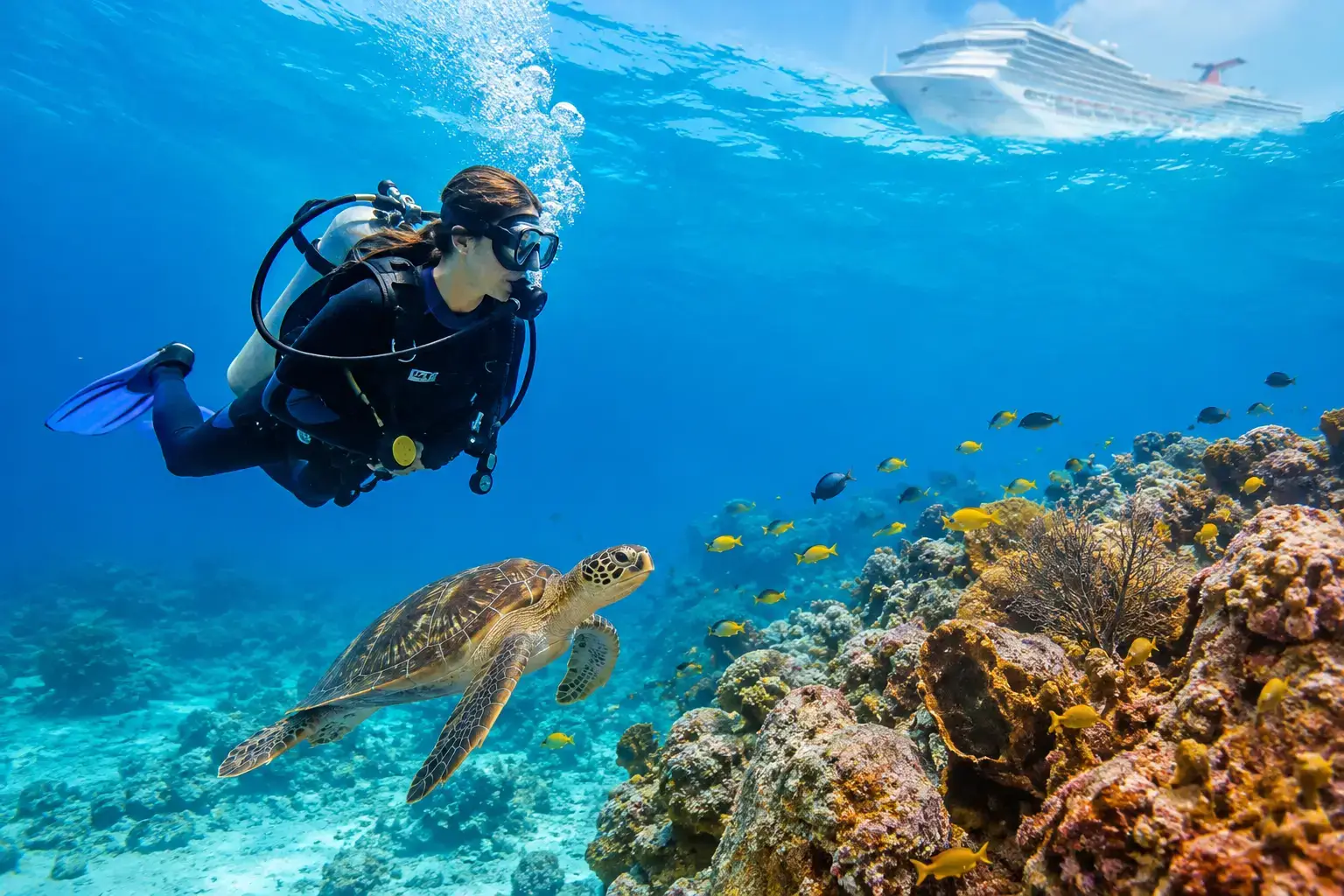
The first glimpse of Cozumel’s water from a cruise ship can make one decision feel easy: you want to get below the surface. Scuba diving here is not just another beach-day add-on. It is a chance to see bright coral formations, tropical fish, sea turtles, sponges, and dramatic reef walls in some of the Caribbean’s clearest water – all within the limited hours of a port call.
For cruise visitors, the best day is built around more than a beautiful reef. Your experience needs to fit your certification level, comfort in the water, transportation needs, and ship schedule. A little planning helps turn a good excursion into the highlight of your Cozumel stop.
Why Scuba Diving in Cozumel Stands Out
Cozumel sits beside the Mesoamerican Reef system, and its western shoreline is known for clear conditions, healthy coral structures, and a wide range of dive sites. Some reefs offer gentle slopes and colorful shallows that work well for newer divers. Others feature swim-throughs, pinnacles, and deep walls for certified divers seeking a more dramatic underwater setting.
The current is part of the experience. Many local dive trips are drift dives, meaning the boat follows the group while divers move naturally with the water over the reef. It can feel effortless and exciting once you understand the plan, but it is not the same as lingering in one spot for a long time. Conditions vary by day, so a professional crew may adjust the site selection for visibility, current, weather, and the group’s experience.
That flexibility matters. A famous reef name is less important than choosing a route that is safe, enjoyable, and appropriate for the people in the water that day. Palancar, Colombia, and Santa Rosa Wall are names many divers recognize, but the right site depends on your certification and comfort, not just your wish list.
Choose the Right Scuba Diving Experience
Before you book, start with one honest question: are you certified to scuba dive? If yes, have your certification information ready and be realistic about your recent experience. A diver who has not been underwater in several years may still have a wonderful day, but a refresher or a more relaxed profile can be the smarter choice.
If you are not certified, look for a beginner-friendly introductory experience led by a qualified instructor. These programs generally begin with equipment orientation, basic breathing and safety skills, and closely supervised time in shallow water before any open-water portion. They are designed for first-timers, but they are not a substitute for full certification. Read the age, health, swimming, and participation requirements carefully before reserving a spot.
Families and mixed groups should pay special attention here. Snorkeling may be the better match for travelers who want to see the reef but do not want tanks, training, or depth. Meanwhile, certified divers often get more from a dedicated dive boat than from a general water activity that tries to serve every interest at once. Matching the activity to the traveler is the easiest way to avoid spending valuable port time on something that feels rushed or uncomfortable.
Plan Around Your Cruise Schedule
A great dive day should leave you excited, not checking your watch every five minutes. When comparing scuba options, confirm the meeting location, check-in time, estimated return time, and transportation plan. Cruise passengers should allow a comfortable margin between the scheduled end of the excursion and their ship’s all-aboard time.
Morning trips are often appealing because water conditions can be calmer early in the day and you still have time afterward for lunch, shopping, or a walk near the waterfront. But the earliest departure is not automatically best if your ship arrives later or you need time to disembark. Port arrival times can differ from the time passengers are actually able to leave the ship.
Pay attention to the pier listed on your itinerary. Cozumel has multiple cruise terminals, and meeting points can vary by activity. Clear pre-trip instructions are worth far more than guessing where to go once you are ashore. If you are booking through Cozumel Cruise Excursions, experienced agents can help you identify port-compatible options and understand the logistics before travel day.
Hotel guests have more flexibility, yet the same principle applies. A shorter, well-organized dive trip can be better than trying to pack too much into one day, particularly if you have flights, dinner plans, or another activity later on.
What a Well-Run Dive Day Looks Like
The strongest scuba excursions make the process feel straightforward from check-in through the return ride. You should expect a crew that reviews the day’s conditions, confirms experience levels, explains the boat layout, and gives a clear briefing before entering the water. The briefing should cover the route, maximum depth, hand signals, buddy procedures, how to rejoin the group, and what to do if you become separated.
Small groups can make a meaningful difference, especially for newer divers or travelers returning after a break. There is more room to ask questions, move at a comfortable pace, and get personal attention with gear setup. It also makes the boat ride and surface interval more relaxed. Larger trips may cost less, so the trade-off is simple: decide whether the savings outweigh the value of a less crowded experience.
Equipment policies vary. Some trips include standard gear, while others may charge separately for items such as a dive computer, wetsuit, or underwater camera. Bring your own mask if you have one that fits well. A familiar, properly fitted mask can prevent a surprising amount of frustration underwater. Certified divers who prefer their personal regulator or fins should confirm what storage and setup options are available.
Prepare Before You Leave the Ship
A little preparation protects both your comfort and your underwater time. Use this quick checklist before heading to your meeting point:
- Bring your certification card or accepted digital proof if you are a certified diver.
- Eat a light meal and drink water before boarding, especially in warm weather.
- Pack reef-safe sun protection, a towel, dry clothes, and a secure way to protect valuables.
- Avoid alcohol before diving, and be honest about any medical condition, ear congestion, or recent illness.
- Follow the crew’s guidance on flying after diving if you have an upcoming flight.
Sea sickness is another practical consideration. Even travelers who feel fine on a large cruise ship can be sensitive on a smaller boat. If you are prone to motion sickness, plan ahead with an option approved by your doctor or pharmacist and take it early enough to work.
Get More From the Reef
Once you are underwater, the best divers are usually the calmest ones. Move slowly, keep your hands off the reef, maintain good buoyancy, and look closely instead of racing ahead. A sea turtle may glide past in seconds, but a small section of coral can reveal angelfish, parrotfish, lobsters, crabs, and tiny juvenile fish when you pause to watch.
Listen to your guide’s pace and stay close enough to see their signals. Guides often spot marine life that visitors miss, from spotted eagle rays in open water to creatures tucked into coral ledges. If photography is a priority, mention it before the trip. A guide can often suggest whether a wide reef scene, a turtle encounter, or smaller macro-style subjects are more likely at the selected sites.
Most importantly, treat the reef as a living place rather than a backdrop. Do not touch coral, chase animals, or stand on the bottom. Good reef etiquette protects the environment and improves the experience for everyone who comes after you.
A well-chosen scuba day gives cruise travelers something rare: a real Caribbean adventure that still respects the clock. Pick the experience that fits your skills, leave room in your schedule, and let the reef provide the stories you will be talking about long after the ship sails away.