
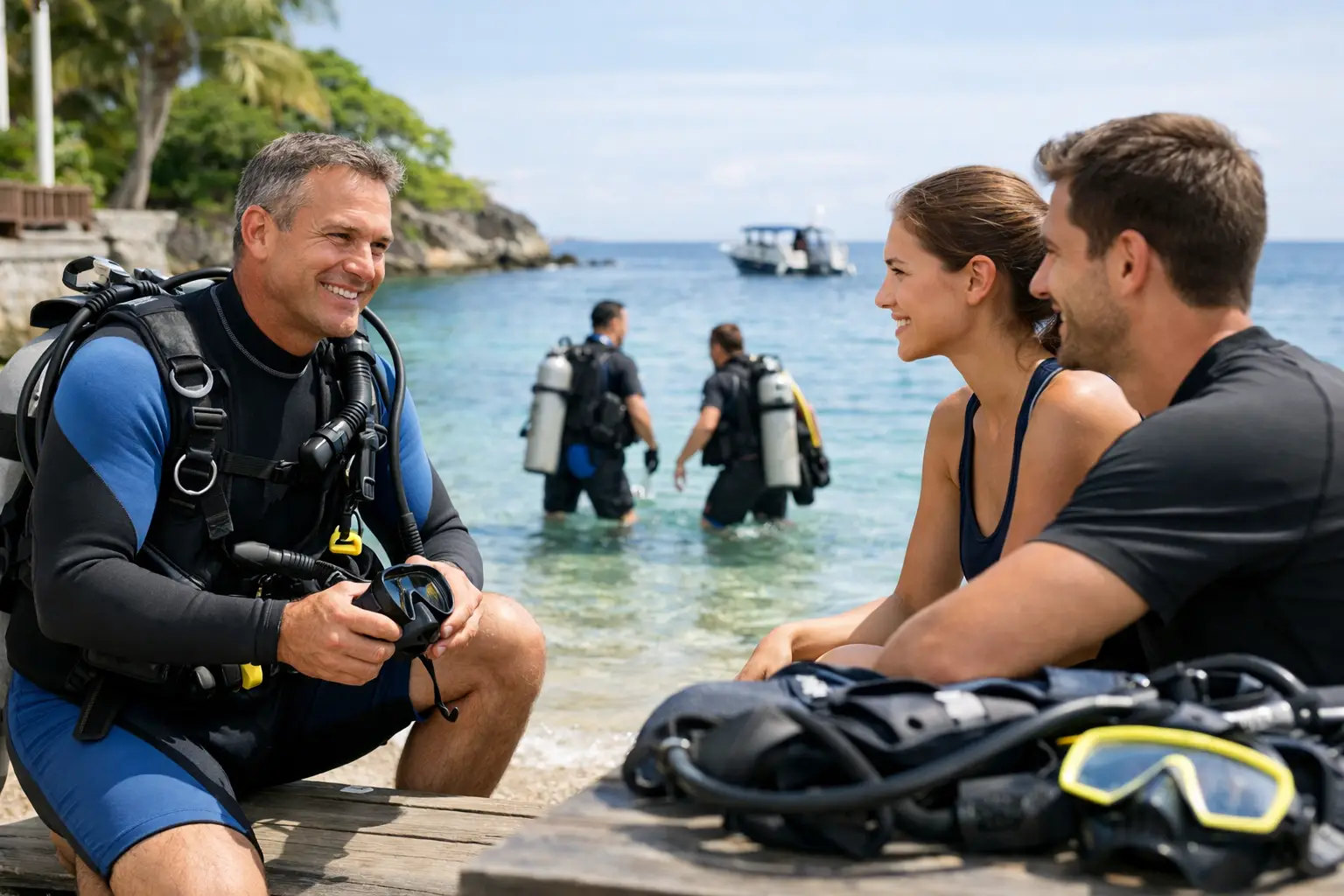
A Discover Scuba experience is made for the traveler who has looked over the side of a Cozumel boat, seen that clear Caribbean water, and thought, “I want to see what is down there.” You do not need a scuba certification to try it, but knowing how to prepare for Discover Scuba can make the difference between spending the first part of your trip nervous and spending it amazed by the reef.
This is not a test of toughness or athletic skill. It is a professionally supervised introduction to breathing underwater, using scuba equipment, and visiting a shallow dive site. Your job is simple: arrive rested, be honest about your health, listen closely, and give yourself permission to go at a comfortable pace.
What a Discover Scuba Experience Is – and Is Not
Discover Scuba is commonly an introductory program for people who have never been certified to dive. Before entering the water, an instructor or dive professional explains the equipment, basic underwater communication, equalizing pressure in your ears, and the safety skills you will practice in shallow water. After you are comfortable, the group may continue to a suitable reef area under close supervision.
It is not the same as completing an open-water scuba certification. You will not leave as an independent diver, and you should not expect the depth, freedom, or itinerary of a certified two-tank dive. That is a good thing for first-timers. The format keeps the focus on learning to breathe calmly, noticing the reef, and enjoying a new experience with professional support nearby.
Requirements and the exact in-water plan can vary by operator, weather, sea conditions, age, and your comfort level. A quality provider will never rush you through a skill just to keep the schedule moving.
How to Prepare for Discover Scuba Before Your Cruise
The best preparation starts before you pack. First, read the activity requirements carefully. Introductory scuba programs typically have age limits, swimming expectations, and a medical questionnaire. You do not need to be a competitive swimmer, but you do need to be comfortable in the water and able to follow instructions without panic.
Be completely straightforward on the medical form. Asthma, heart conditions, recent surgery, ear or sinus problems, seizure disorders, pregnancy, certain medications, and other health factors may require a doctor’s clearance or may mean scuba is not a good fit that day. This is not paperwork to rush through on the pier. It exists because pressure changes underwater affect the body differently than snorkeling or swimming.
If you have any uncertainty, speak with your physician before travel and bring any requested clearance in writing. Do not assume a mild cold is irrelevant, either. Congestion can make it difficult or painful to equalize your ears. Choosing snorkeling, a beach day, or another Cozumel excursion is far more enjoyable than forcing a dive when you cannot clear comfortably.
You also need to plan around flying. Scuba diving and air travel need time between them because of decompression considerations. For cruise guests, this usually means scheduling your Discover Scuba day well before your flight home, not on a final morning followed by a same-day flight. Follow the operator’s stated guidance, especially if you may take more than one dive.
Build confidence in the water, not pressure on yourself
If you have time before your trip, visit a pool. Float on your back, put your face in the water, and practice slow, steady exhalations. Even five or ten relaxed minutes can help you become familiar with the feeling of water around your face.
You do not need to buy scuba gear or memorize technical terms. In fact, trying to learn everything from online videos can create unnecessary anxiety. Your instructor will teach the skills you need in the order you need them. Arrive curious, not overprepared.
The Night Before: Rest, Hydrate, and Skip the Party
A great first dive begins with a normal, sensible evening. Get enough sleep, drink water throughout the day, and eat a balanced meal. Caribbean sun, travel fatigue, and dehydration can make anyone feel off balance on a boat, even before putting on dive equipment.
Avoid heavy drinking the night before and do not arrive hungover. Alcohol can contribute to dehydration, poor judgment, nausea, and a harder time staying focused during your briefing. The reef will still be there tomorrow. Give yourself the best chance to enjoy it.
On the morning of your excursion, eat a light breakfast or snack rather than showing up on an empty stomach. Something familiar is usually better than a huge meal. If you are prone to motion sickness, ask a medical professional or pharmacist ahead of time about an appropriate remedy, and take it according to directions well before the boat leaves. Some products can cause drowsiness, so understand how they affect you.
What to Bring for Your First Scuba Dive
Most Discover Scuba operators provide the essential equipment: mask, fins, buoyancy device, regulator, tank, weights, and often a wetsuit or rash guard when conditions call for one. Bring your swimsuit already on, a towel, reef-safe sun protection for time above water, sunglasses, and a change of dry clothes for the ride back.
A small amount of cash for optional tips or personal purchases can be useful, but leave valuables behind whenever possible. If you wear contact lenses, many divers use them without a problem, though it is smart to bring a backup pair or glasses for after the activity. Prescription masks may be available with some operators, but do not assume one will be on hand unless you have confirmed it.
For cruise passengers, carry your cruise card, a photo ID if required, and your excursion confirmation details. Keep your phone protected in a dry bag or leave it securely stored. You will be happier watching the water than worrying about a wet screen.
At the Dive Shop
The pre-dive briefing is where the experience starts to feel real. Pay attention even if you have snorkeled many times. Scuba has a different rhythm: you breathe continuously through the regulator, move slowly, and communicate with hand signals rather than words.
Tell the instructor if anything feels uncomfortable. A mask that leaks, fins that rub, a wetsuit that feels too tight, or a regulator that feels unfamiliar can often be adjusted before you enter the water. There is no prize for pretending everything is fine.
The two skills that concern most first-time divers are breathing and ear equalization. Breathe slowly and continuously. Never hold your breath underwater. For your ears, equalize early and often as you descend, using the method your instructor demonstrates. If you feel pain or cannot clear, signal immediately. You can pause, ascend slightly, try again, or decide not to continue. That is sound diving judgment, not failure.
Your pace sets the tone
Some guests are comfortable within minutes. Others need extra time in shallow water before moving on. Both are normal. The best introductory dive is not the deepest one or the one with the most photos. It is the one where you remain relaxed enough to notice the fish, coral formations, and astonishing blue water around you.
If the ocean conditions are choppy, visibility is lower than expected, or you simply do not feel ready, listen to your instructor and your body. Operators may adjust sites or cancel for safety. That flexibility protects the experience, especially when weather has other ideas.
Make It Work With a Cruise-Port Schedule
A limited day in port calls for smart timing. Choose an experience built around your ship’s arrival and all-aboard schedule, and allow a generous buffer for transportation, check-in, and the return to port. Do not book a far-away activity with a tight return window just because the start time looks convenient.
Cozumel Cruise Excursions helps guests compare independent options that suit a cruise day, including small-group water activities that avoid the feel of a packed excursion boat. Still, confirm your ship’s schedule, meeting instructions, and any time-zone details before leaving the vessel. Port days can change, and the right plan is one that leaves room for the unexpected.
Wear your swimsuit off the ship if practical, and avoid scheduling a large sit-down lunch immediately before the dive. A little organization means more time for the part you came for: seeing Cozumel’s famous marine life from below the surface.
After the Dive, Let the Experience Sink In
Drink water, rinse off, and take a few quiet minutes to enjoy what you just did. First-time divers often come back energized, tired, and surprised by how peaceful it felt underwater. You may want to ask your instructor what you did well and what to practice if you decide to pursue certification later.
Whether Discover Scuba becomes the first step toward future diving or a one-time highlight of your vacation, arrive rested, stay honest about your comfort, and trust the professional briefing. The reef is much more memorable when you meet it calm, prepared, and ready to look around.