
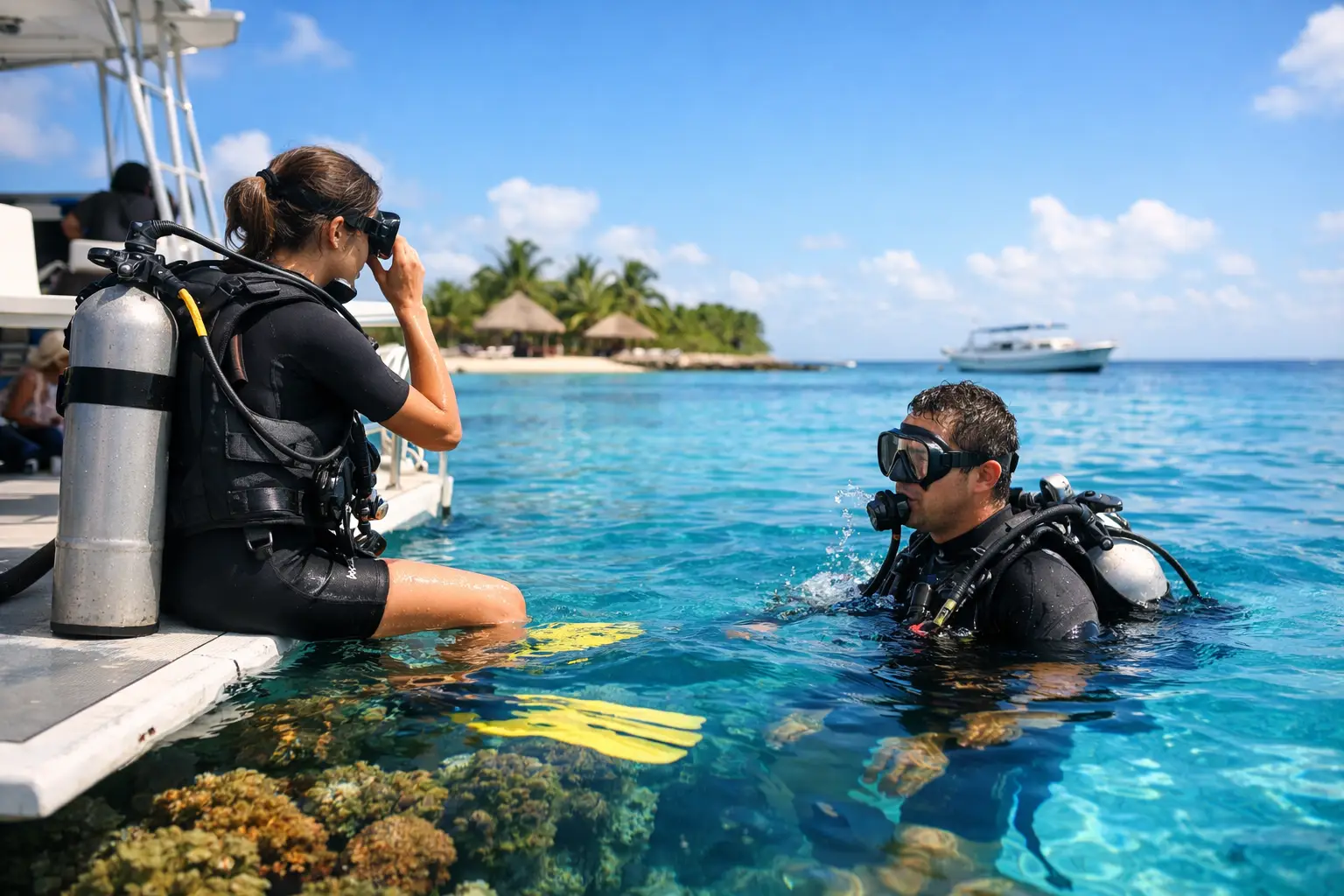
The first time you breathe underwater, the surface suddenly feels very far away. On a Discover Scuba diving Cozumel experience, that moment happens in warm Caribbean water with an instructor nearby, colorful reef below, and no prior certification required. For cruise guests with one valuable day ashore, it is one of the most exciting ways to see why Cozumel is known for amazing coral reefs.
This is not a rushed boat ride with a mask tossed in your hand. A well-run beginner scuba outing starts with clear instruction, appropriate gear, and a pace that lets first-timers get comfortable before heading out to the reef. It is a smart choice for adventurous couples, families with qualifying teens, and friends who want more than a beach day but are not ready to commit to a full certification course.
What Discover Scuba Diving in Cozumel Really Means
Discover Scuba Diving is an introductory, instructor-led experience designed for people who are not certified divers. You will learn the basics of breathing from a regulator, clearing water from your mask, equalizing pressure in your ears, communicating underwater, and moving comfortably with scuba equipment.
Most operators begin with a briefing and shallow-water skills session. Your instructor demonstrates each skill, then gives you time to practice it yourself. Only after you show that you are comfortable will the group move on to the open-water portion of the experience. The exact depth, reef location, and sequence can vary with the operator, weather, sea conditions, and individual comfort level.
That distinction matters. Discover Scuba is not scuba certification, and it does not make someone independently qualified to rent tanks or dive without a professional. It is a supervised introduction. For many guests, that is exactly the appeal: you get a real underwater experience without using your entire vacation to complete classroom work and multiple training dives.
Why Cozumel Is a Great Place for a First Dive
Cozumel offers conditions that can make the learning curve feel less intimidating. The water is often warm, the visibility can be excellent, and many reef areas offer gentle conditions suitable for introductory outings. Instead of trying to spot marine life in murky water, beginners may see schools of tropical fish, coral formations, rays, sea turtles, and the bright colors that make Caribbean diving memorable.
The island’s reef system is also part of the Mesoamerican Barrier Reef, a major reason experienced divers return year after year. First-time participants do not need to understand every fish species to enjoy it. The fun is in floating quietly above the coral and realizing that an entire world has been there beneath the boat all along.
Is a Discover Scuba Experience Right for You?
Being a strong swimmer is helpful, but you do not need to be an Olympic athlete. What you do need is comfort in the water, the ability to follow instructions, and a willingness to speak up if something does not feel right. Scuba is enjoyable when guests take the briefing seriously and let themselves learn at a steady pace.
Before booking, consider whether you can meet the typical participation requirements. Operators may have their own age limits, swimming expectations, health questionnaires, and medical policies, but these common factors deserve attention:
- You should be medically fit for scuba activity and honestly complete the required health forms.
- Asthma, heart conditions, recent surgery, pregnancy, ear problems, or certain medications may require medical clearance or may prevent participation.
- You should not plan to scuba dive shortly before flying, because divers need an appropriate surface interval before air travel.
- Children and teens may be eligible depending on age, maturity, and operator rules, usually with a parent or guardian involved.
If you have any questions about a medical condition, ask before you travel rather than assuming it will be fine at check-in. A reputable dive team would rather help you choose the right activity than put you in a situation that is not suitable.
How to Fit Scuba Into a Cruise Port Day
For cruise passengers, the best scuba excursion is not simply the one with the lowest advertised price. It is the one that fits your ship’s actual arrival and all-aboard times, includes clear meeting instructions, and leaves reasonable room to return to port. A fantastic reef experience loses its shine if you spend the afternoon watching the clock.
Choose a departure time that works with your ship schedule, including the time needed to disembark and reach the meeting location. Cruise itineraries can change, so verify the details close to sailing. Morning tours are often attractive because they generally leave more cushion later in the day, but the right choice depends on your vessel’s schedule and the excursion’s meeting point.
Independent excursions can offer smaller groups and better value than cruise-line options, but the booking details matter. Look for a provider that understands cruise port timing, communicates promptly, and offers practical support if your schedule changes. Cozumel Cruise Excursions focuses on independent operators and port-compatible experiences, with professional booking agents available to help guests select an outing that makes sense for their day ashore.
Bring a towel, biodegradable sunscreen if permitted by the operator, a secure way to store valuables, and a dry change of clothes for afterward. Most scuba programs provide the essential dive equipment, but confirm what is included before booking. If prescription vision is an issue, ask whether corrective-mask options are available. Do not assume every operator carries the same gear sizes or accessories.
What Makes a Beginner Dive Feel Better
The best first scuba experience is rarely the deepest one or the one with the biggest group. It is the one where you feel heard. Small groups give instructors more opportunity to check in, correct a mask issue, and keep everyone together without turning the day into a production line.
Expect the first few breaths through a regulator to feel unusual. Your body is used to breathing through your nose, while scuba breathing happens slowly and steadily through your mouth. Give yourself a minute. Focus on long, calm breaths and look at your instructor when you need reassurance. Many beginners settle in quickly once they realize they can breathe normally underwater.
Mask clearing and ear equalization are the two skills that often require patience. Do not push through discomfort in your ears. Signal your instructor, pause, and try again when directed. There is no prize for descending faster than everyone else. The reef will still be there when you are ready.
It also helps to set the right expectation: this is a guided introduction, not a race to collect dramatic underwater footage. Some guests feel comfortable immediately and want more time below. Others enjoy the skills session and decide snorkeling is their preferred way to see the reef. Both reactions are completely valid. A good excursion should leave you excited, not pressured.
From First Breath to Your Next Adventure
A Discover Scuba outing can be a one-time vacation highlight, or it can be the start of a new travel habit. If you come back to shore talking about the fish you saw and wondering what it takes to become certified, that is a great sign. Certification courses involve more training and are worth considering if you want to explore deeper sites or dive independently with a buddy in the future.